TEKKEN 3 1997
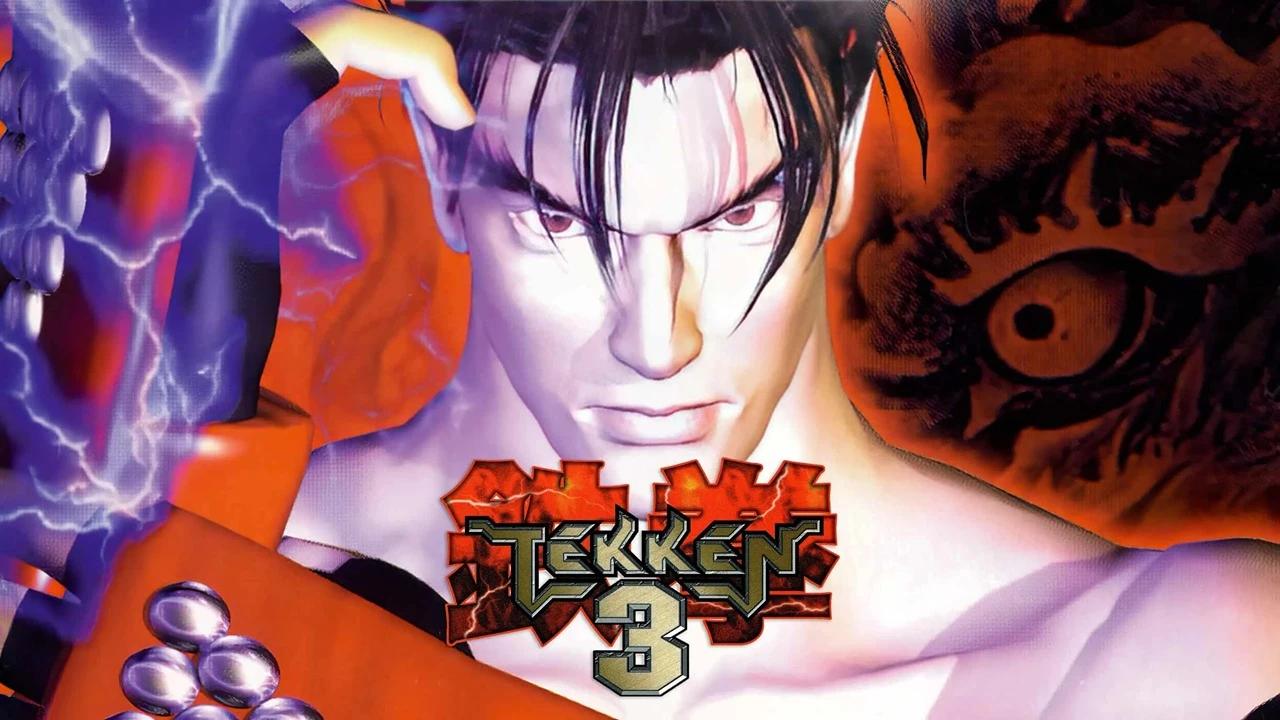
Introduction: A Turning Point in Fighting Games
In the mid‑1990s, the fighting game genre was evolving rapidly. 2D fighters had dominated arcades and consoles for years, but hardware advances and player expectations pushed developers toward more ambitious designs. It was in this moment that Tekken 3 emerged — a title that didn’t just iterate on its predecessors, but boldly reinvented how a 3D fighter could feel, play, and sustain arcade relevance.
Released in arcades in 1997 by Namco, Tekken 3 is often hailed as one of the greatest fighting games ever made. shmuplations.com+4Wikipedia+4Tekken Wiki+4 But what made it so special? Let’s dive into the journey: its development, innovations, challenges, cultural impact, and why it still resonates today.
1. Birth of Tekken 3: Development & Vision
Rising Pressure & Creative Battle
After Tekken 2’s success, expectations were exceedingly high for the next chapter. The development team knew that simply iterating would not be enough. As Harada and other developers later recounted, there was a sense of internal competition within Namco’s teams — a kind of "war zone" environment where people fought (figuratively) to push bold ideas. shmuplations.com The goal was not mere refinement, but a reinvention — Tekken 3 would be “the beginning of real Tekken,” as one dev put it. shmuplations.com
Hardware Leap: System 12
To enable more ambitious visuals and mechanics, Tekken 3 was the series’ first game built on Namco’s System 12 arcade hardware, an upgrade over the System 11 used in Tekken 1 and 2. tekkengames+4Wikipedia+4Tekken Wiki+4 This shift allowed more detailed character models, smoother animations, better background effects, and more fluid movement—key to delivering the "feel" that would distinguish Tekken 3 from older entries.
Core Design Philosophy: More Freedom, Speed & Depth
The team looked critically at what worked and what didn’t in earlier Tekken games. Some of the major design changes included:
-
Sidestepping for all characters: Whereas Tekken 1 and 2 allowed sidesteps or certain evasive maneuvers for only some characters, Tekken 3 granted all fighters the ability to sidestep (move “in” or “out” of the screen) as a standard. Wikipedia+2tekken.neoseeker.com+2 This added genuine 3D depth to fights, not just superficial visuals.
-
Faster recovery & more combos: Knockdowns recover faster, juggling and combo opportunities increased, and move sets were rebalanced so match flow felt more dynamic. Square Eye Retro Arcade+2tekkengames+2
-
Delayed input & input buffer mechanics: Tekken 3 introduced more refined input-handling systems, such as buffering moves or allowing delayed commands, which gave players more control in aggressive or high-speed scenarios. shmuplations.com+1
-
Rethinking character roster: Only six of Tekken 2’s characters returned. The rest of the roster was largely new, injecting freshness and accommodating the new design philosophy. Square Eye Retro Arcade+2tekkengames+2
-
Narrative shift & timeline jump: The story jumps 20 years ahead, enabling new relationships and motivations (for example, the introduction of Jin Kazama) while distancing players from earlier constraints. Tekken Wiki+3eng.tekkenpedia.com+3shmuplations.com+3
It was a bold gamble — to break from the past and build something more expressive, technical, and future-focused.
2. Arcade Launch & Reception
Release & Arcade Strategy
Tekken 3 hit Japanese arcades in March 1997, following development in 1996. shmuplations.com+3eng.tekkenpedia.com+3tekkengames+3 Globally, it secured strong arcade presence. The game’s PCB (printed circuit board) utilized the System 12 architecture and employed a configuration screen (rather than DIP switches) for operator settings. arcade-museum.com
Namco rolled out approximately 35,000 arcade units worldwide — a remarkable figure for a fighting game. tekkengames+3Wikipedia+3WikiMili.com+3 In Japan, Tekken 3 became the top-grossing arcade PCB of 1997, and by 1998 it overtook its rivals to become Japan’s highest-grossing arcade title. WikiMili.com+2Wikipedia+2
Player & Critical Reception
Across arcades, Tekken 3 drew crowds. Its visuals, speed, and depth impressed both hardcore fighting fans and casual players alike. Critics praised its balance of accessibility and complexity. Over time, retrospective rankings have frequently placed it among the top fighting games of all time. WikiMili.com+4Wikipedia+4Tekken Wiki+4
The game’s success on arcade hardware later helped its PlayStation port gain attention even before home release — giving it momentum heading into the console space.
3. From Arcade to Home: Porting Challenges & Features
PlayStation Conversion
Porting an advanced arcade game to the original PlayStation was never trivial. The Tekken 3 development team took about 8 months to bring the arcade experience home, trying to compress or adapt features without losing too much flair. Tekken Wiki+4Wikipedia+4tekkengames+4
Given hardware limitations, certain compromises were inevitable. Backgrounds in the console port sometimes appeared flatter or less detailed compared to the arcade, though character fidelity remained strong. Tekken Wiki+3Angelfire+3tekkengames+3
To sweeten the port, Namco added new modes:
-
Tekken Force — a side-scrolling beat ’em up mode where you fight waves of enemies. Tekken Wiki+3Wikipedia+3tekkengames+3
-
Tekken Ball — a volleyball-style mode where hits of the ball translate into damage effects; you aim to K.O. opponents via ball play. Tekken Wiki+3Wikipedia+3tekkengames+3
-
Unlockables — such as the manga character Gon and Dr. Bosconovitch were exclusive to the home version. Wikipedia+3Angelfire+3tekkengames+3
These additions gave players incentives beyond the standard arcade mode and bolstered replay value.
4. Gameplay, Mechanics & Strategy
What made Tekken 3 feel so alive? Let’s look at some key mechanics and how they shaped strategy.
Sidestepping & 3D Space
By enabling sidesteps for all fighters, matches took on real 3D dynamics. Rather than being bound to a flat plane, players could dodge attacks by stepping into or out of the screen. This added mind games, spacing depth, and defensive nuances that previous entries lacked. tekken.neoseeker.com+2tekkengames+2
Juggling & Combo Depth
Tekken 3 pushed more opportunities for juggles — where you strike a grounded opponent, send them airborne, and continue with follow-up attacks. The faster knockdown recovery and buffer system made such combos more consistent. Tekken Wiki+3Square Eye Retro Arcade+3shmuplations.com+3
Movement & Aggression
Movement speed was higher than in prior Tekken games. Coupled with faster recovery, players could engage more aggressively. But every risk had a counter; spacing, whiff punishing, and capitalizing on errors mattered more. tekken.neoseeker.com+2tekkengames+2
Character Variety & Styles
With many new characters, each brought unique traits. Some had stance transitions (e.g. Hwoarang’s left/right stances), others had unorthodox styles. This variety contributed to a learning curve and longevity. shmuplations.com+2tekkengames+2
Time‑Release System & Unlocks (Arcade Cult Detail)
An interesting arcade quirk: some versions of Tekken 3 employed a time‑release mechanism. Certain characters would become selectable only after the machine had been on for a set number of hours. Reddit This system prevented full rosters from being available immediately, encouraging players to revisit or arcades to stay active.
5. Cultural Impact & Legacy
Defining a Generation
Tekken 3 arrived at a high point in the arcade vs console era. It bridged the gap: its arcade success pulled players into home consoles, and its home popularity reinforced its arcade legend. Its roster — Jin Kazama, Ling Xiaoyu, Hwoarang — would become staples of the franchise for years to come. Tekken Wiki+3Square Eye Retro Arcade+3shmuplations.com+3
Many fans today recall Tekken 3 as the game they played growing up. Its music, stages, combos, and characters became cultural touchstones. Its influence is visible in how 3D fighters progressed, not just in Tekken but across the genre.
Re‑Releases & Preservation
-
In 2005, the arcade version of Tekken 3 was included in Tekken 5’s “Arcade History” mode on the PlayStation 2. eng.tekkenpedia.com+2tekkengames+2
-
Despite this, some fans reported problems—Tekken 3 within Tekken 5 sometimes “hangs” or fails to run properly in that mode. Reddit+1
-
It also seems that Tekken 3’s speed (or feel) differs between the original and arcade-historical versions. Some players say the original feels “slower” than later re-releases—possibly due to emulation or timing differences. Reddit
The fact that nearly three decades later people still debate performance nuances shows how passionate the community is.
Influence on Future Tekken Titles
Tekken 3 set a high bar. Its design philosophies echoed into Tekken 4, 5, and beyond. Many core elements — fluid 3D movement, attention to frame data, combo depth — became pillars for the rest of the series. It showed that a major sequel could reimagine the foundation, not just tweak superficial details.
6. Challenges & Critiques
No masterpiece is without flaws. While Tekken 3 is beloved, it faced some critiques and limitations.
-
Port fidelity compromises: The PlayStation version had visual downgrades (especially in backgrounds) and sometimes less responsive behavior. Angelfire+2tekkengames+2
-
Learning curve: For newcomers, the flow and mechanics could sometimes overwhelm — juggling, sidestepping, timing, and advanced moves demanded effort.
-
Story & narrative limits: As was common then, the game’s storytelling in arcade mode was minimal — a handful of ending cutscenes plus manual lore. The deeper Tekken universe narrative would expand in later games. Reddit+2tekkengames+2
-
Hardware dependence: The experience of playing on original hardware (CRT, cabinet feel, arcade controls, sound) is distinct. Emulated or console versions can’t perfectly replicate that tactile and audio “arcade soul.”
Despite these, the strengths overwhelmingly prevailed.
7. Personal Reflection & Why It Still Matters
As a longtime fan, returning to Tekken 3 always feels like visiting a “golden age.” The split-second decisions, the weight behind each punch or kick, the stylish animations — it reminds me how games can be deeply mechanical and deeply human. It wasn’t just about winning — it was about mastery, expression, and creativity under constraints.
In today’s world of online matches, balance patches, and DLC, Tekken 3 stands as a monument to a time when fights were raw, immediate, and unfiltered. It’s an exemplar of how tight design, hardware ambition, and a bold vision can align to produce something timeless.
Legacy-wise, Tekken 3 continues to inspire. Community tournaments, retro arcades, speedrunners, modders, and even YouTube retrospectives revisit it endlessly. It’s more than nostalgia: it’s respect.
Conclusion: The King of Iron Fist, Still Reigning
Tekken 3 (1997 Arcade) is not just a classic — it’s a watershed moment. It redefined what a 3D fighting game could be. Its risks, both technical and design-wise, paid off. From its ambitious development environment at Namco, to its bold mechanics, to its lasting fan love — Tekken 3 is a statement.
In an era that often treats games as disposable or ephemeral, Tekken 3 reminds us that some titles endure — because they deliver soul, depth, challenge, and reverence for the craft. Even now, nearly thirty years later, its spirit lives on in every punch, juggle, sidestep, and combo in the Tekken series.
If you have specific topics you want added — character breakdowns, move lists, design interviews, or comparisons with modern fighters — I’d love to expand this further!
Disclaimer: This article is intended for educational and informational purposes only
DOWNLOAD LINK
https://filenext.org/b37d62389e5d3904/Tekken_3.zip?download_token=80f497dc5b79f8cecd46a61ab97ec896a9727cbdce78cf94fd27a8ac9734a7b1.


Comments
Post a Comment